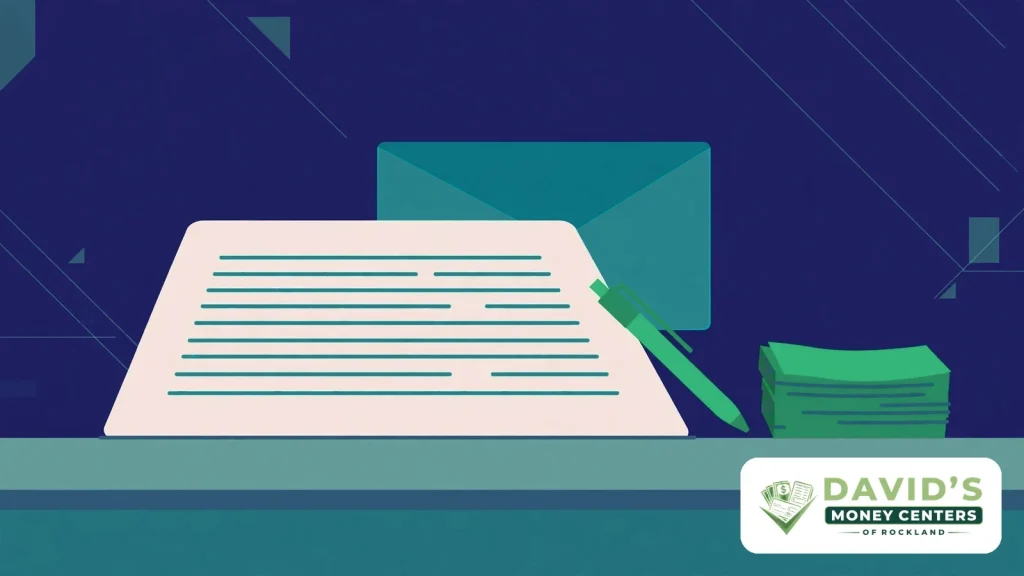
Some payments should not travel as cash, and some should not wait on a personal check. That middle ground is where the money order still earns its place: you pay for it up front, and the person or company receiving it gets a paper instrument backed by money already paid, not by the balance in someone’s account.
Money orders are offered at all four David’s Money Centers of Rockland locations — Nanuet, Spring Valley, Nyack and West Haverstraw — alongside the other everyday services on our services page.
Situations where a money order makes sense
- Rent and housing payments, where a landlord wants a verifiable paper payment rather than cash.
- Payments by mail, where sending cash is risky and a personal check shares more account information than you want in an envelope.
- Deposits and application fees, where the receiver wants a payment instrument that is paid for up front.
- Buying from a private seller who will not take a personal check from someone they do not know.
What to confirm before you buy
Money orders have practical limits and fees, and the details are confirmed at the counter before you pay. Ask three things: the maximum amount for a single money order (larger payments may need more than one), the fee for the amount you need, and exactly how the payee name should be written. Write the payee line carefully and keep your receipt separate from the money order itself — the receipt is your proof of purchase and the key document if a money order is ever lost or needs tracing.
A two-minute habit that prevents headaches
Fill in the payee name as soon as you buy the money order. A blank money order is close to cash: anyone holding it may be able to complete it. Note the amount and payee on your receipt copy, and keep that receipt until the payment has cleared with the receiver.
Money order, cash or personal check — the short version
Cash is immediate but leaves no record and cannot be replaced if it is lost. A personal check carries your bank details, can be returned unpaid, and asks the receiver to trust your balance. A money order sits between the two: paid for in advance, payable to a named payee, and backed by a receipt that lets it be traced. That is why landlords, agencies and private sellers who will not take a personal check will often take a money order — it answers their two questions (is it real, and is it paid for) on the spot.
Need one today? Any David’s branch can explain the current limits and fees for the amount you have in mind before you complete the purchase.
Money orders sit alongside personal services like Western Union transfers and bill payment at every branch — addresses and hours are on the locations page, and common questions are answered on our FAQ page.


